Costs
Part of Small Business Market Research: Trends, Cohorts, Competitors
7 Small Business Market Research Checks for Local Promotion
Small business market research checklist for local promotion: decision, local data, customer surveys, fieldwork, analysis, disposition and privacy checks.
What to take away
- Mark every item pass, fail, unknown, or not applicable, and attach evidence, an owner, and a review date to each of the 7 checks.
- Do not begin fieldwork until the decision, population, recruitment, consent, access, data, and stopping rules are clear.
- The report must preserve instruments, source metadata, contradictions, limitations, economics, and the action the evidence supports.
A small business market research checklist should make the evidence and its limits auditable before money goes into a local promotion: which neighborhood to target, which offer to run, which channel to buy, and which customers to ask.
Work the seven checks in order: 1) decision and scope, 2) sources and market estimates, 3) participants and instruments, 4) fieldwork and data protection, 5) analysis and reporting, 6) disposition, and 7) privacy, security, and acquisition.
1. Decision and scope
Decision and Scope Checks
- Decision, alternatives, owner, deadline explicit
- Cost of error, threshold, next action set
- Assumptions rankedcustomer, need, price
- Target marketbuyer, user, occasion, exclusions
- Method fills named evidence gap
- The decision the research must support, the options on the table, and the date the answer is needed.
- The population, geography, period, and unit the evidence must cover.
- The assumptions that would reverse the decision if they turn out to be wrong.
- The budget, the stopping rule, and the items a solo owner will run.
For a local business the decision is usually concrete: sponsor the spring street festival or mail the two closest neighborhoods, open Saturday mornings or not, add a delivery zone across the river or not. Write the decision in one sentence and the trading area as a list of ZIP codes or streets, so every later check covers the same ground.
A solo owner typically works through the seven checks in three to five hours on a first pass. Four of them carry most of the weight: decision and scope, sources, participants, and reporting. Mark any other item not applicable only with a written reason.
2. Sources and market estimates
- Official, public, internal, and direct evidence were searched before commissioning new data collection.
- Every statistic includes URL, table, code, unit, geography, period, release, coverage, revision, and download date.
- Classification, statistical unit, suppression, rounding, missing data, and methodology changes are documented.
- Market ranges use sourced filters, sensitivity cases, reachable channels, capacity, competition, and complete economics.
Before you pay for anything, check what is already published. The North American Industry Classification System classifies business establishments by type of economic activity and is used by governments and business in Canada, Mexico, and the United States, so the code you pick decides which official series covers your trade. It is a collaborative effort by Mexico's INEGI, Statistics Canada, and the United States Office of Management and Budget, staffed by the Bureau of Economic Analysis, the Bureau of Labor Statistics, and the Census Bureau. The Center for Economic Studies at the Census Bureau publishes the Business Dynamics Statistics and public use datasets, including Census-SUSB and BLS-BED. Pull the local slice for your trading area rather than the national total, and enter it in the source table like any other statistic.
Two free Census Bureau tools give that local slice. County Business Patterns is an annual series of subnational data for establishments with paid employees by industry and employment size, which shows how many competitors in your code operate in your county. Census Business Builder lets you select the location you want to research and nearly any type of business, then map, compare, and download the demographic and economic data for that area.
Your own records are the third source: postcode or ZIP code from orders and bookings, the answer to "how did you hear about us?", and your business profile's calls and direction requests. They show where current customers actually come from, which official data cannot.
3. Participants and instruments
- Population, sampling frame, recruitment, quotas, inclusion, exclusion, incentives, language, accessibility, and conflicts are defined.
- Questions are neutral, specific, short, understandable, and limited to one concept, with complete options where practical.
- The guide, questionnaire, logic, order, device display, translations, timing, and data capture were piloted.
- Participant notice covers researcher, purpose, activity, recording, incentive, data use, sharing, retention, withdrawal, and contact.
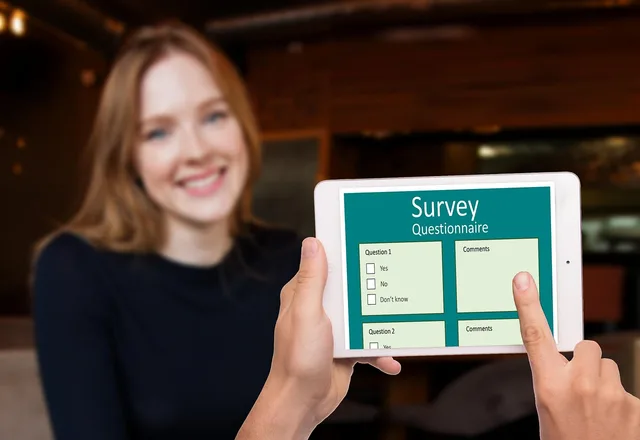
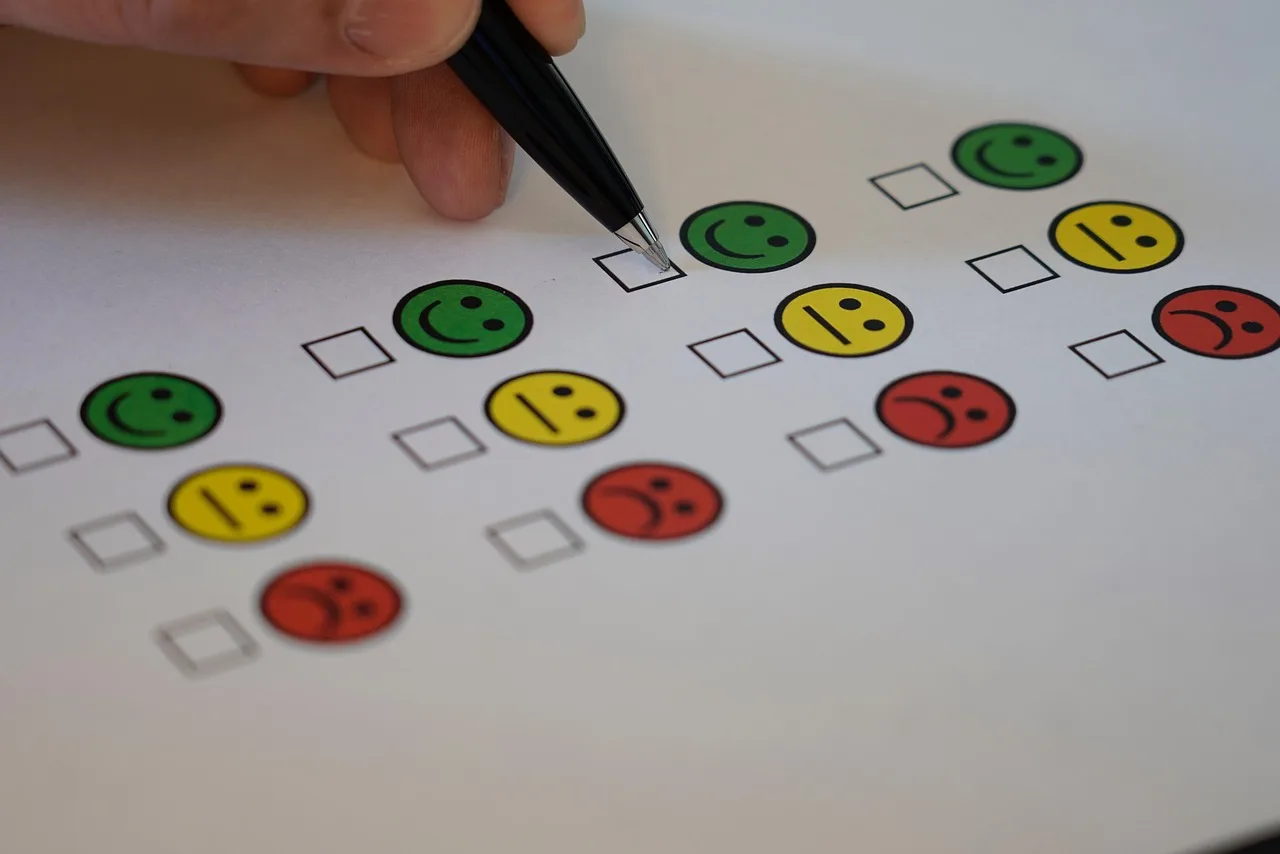
Local research usually runs on three instruments: a short counter or receipt survey for current customers, a handful of conversations with regulars and lapsed customers, and a few questions asked at a district event or market stall to reach people who have not bought yet. Keep each one short enough to finish while the customer waits. Online survey forms need real labels on every field, because placeholders are not a substitute, and accessible forms shape how well participants complete surveys that feed small business market research benchmarks.
4. Fieldwork and data protection
NIST calls its Privacy Risk Assessment Methodology a tool to analyze, assess, and prioritize privacy risks so organizations can choose responses and solutions.
The PRAM is voluntary guidance, not legal clearance, so pair it with a small business marketing strategy checklist that covers evidence and data controls.
- Field dates, contacts, outcomes, refusals, partials, quality checks, changes, incidents, and stopping decisions are logged.
- Only necessary personal data are collected; identifiers are separated where possible; access and vendors are restricted.
- Sensitive topics, vulnerable participants, children, regulated data, international transfers, and recordings received qualified review.
- Security, backups, deletion, breach response, participant requests, and vendor offboarding are tested.
5. Analysis and reporting
- Cleaning, exclusions, variables, codebook, weights, missing values, denominators, calculations, and transformations are reproducible.
- Counterexamples, uncertainty, design limits, nonresponse, coverage, measurement error, and researcher judgment remain visible.
- Charts label bases, units, periods, sources, sample, question wording, and whether estimates support population inference.
- The recommendation, dissent, risks, next test, owner, evidence expiry, and conditions that would reverse the decision are recorded.
Approve the project only when another reviewer can trace an important claim from recommendation to calculation, cleaned data, original evidence, and method.
Worked example: a recommendation to raise the average order value rests on item Q7 of the customer survey. Q7 traces back to the questionnaire, the raw responses, the cleaning rule that removed incomplete cases, and the source table.
That source table is the one built under check 2: every figure in it carries its classification code, release, geography, and download date, so a reviewer can pull the same series and reach the same conclusion.
If all four are present, mark the item pass with an owner and a review date. If the source table is missing, mark it unknown and hold the decision.
The same trace applies to a promotion decision. If the report says "mail the two ZIP codes east of the shop", a reviewer should find the order records that show where customers live, the competitor count for those areas, and the survey answers that say what offer would bring them in.
6. Checklist disposition record
| Status | Meaning | Next action |
|---|---|---|
| Pass | Evidence supports the control | Record owner and review date |
| Fail | Control is missing or broken | Correct before fieldwork or decision |
| Unknown | Evidence is incomplete | Investigate, do not assume |
| N/A | Control does not apply | Document the reason |
7. Privacy, security, and acquisition checks
Survey and booking tools hold the names and contact details you collect, so check who can see the data, where it is stored, and how it is deleted before you choose one, and add the review to a small business market research file beside the governing law.
Voluntary guidance does not set your obligations. What binds you is the law that applies to the people you collect from — in the United States, state privacy statutes such as the California Consumer Privacy Act, enforced by the state attorney general, and the Federal Trade Commission's authority over deceptive data practices; the EU's General Data Protection Regulation applies to participants in the EU. Put the notice, the consent language, the retention period, and the breach response in front of qualified advice before fieldwork starts.
Common questions
When should the checklist be used?
Use it before commissioning research, before fieldwork, before analysis, before a decision, and after material changes to the market, method, instrument, vendor, data, or claim.
Who owns the market research checklist?
Assign one accountable decision owner while research, operations, privacy, security, accessibility, finance, and legal specialists own their relevant controls.
What should happen to an unknown item?
Record the evidence gap, owner, deadline, interim safeguard, and decision it blocks. Never convert unknown to pass without support.