Strategy
Chicago neighborhood business districts and their promotion programs
Chicago local promotion programs run through neighborhood business districts like Andersonville and Pilsen, offering grants, events, and marketing support.
What to take away
- Chicago local promotion programs are run by neighborhood business districts, not one central city office, so what you get depends on where you are.
- Andersonville and Pilsen are the two districts to study first: both mix events, grants, and shared marketing.
- Special Service Areas fund many district programs through a property tax levy that commercial property owners pay.
- District grants are usually small, reimbursable, and tied to a specific activity like a storefront fix or a pop-up.
- Joining a district program starts with the chamber or SSA office that covers your block, then a short application.
- You can layer your own promotions on top of district events at little cost.
How Chicago neighborhood business districts are organized
Chicago has no single agency that promotes every shopping street. The work is split among chambers of commerce, Special Service Areas, and neighborhood development groups. Each covers a defined set of blocks.
A Special Service Area is a taxing district. Commercial property owners inside it pay a small extra property tax, and the city returns that money to the district for services like cleaning, marketing, and events. The SSA budget is public.
SSA commissioners are usually local owners and residents. They vote on the annual budget, which means marketing money is decided by people who run businesses on the same blocks. Show up to a meeting and you can influence where it goes.
A chamber of commerce is a membership group. Dues are voluntary. Chambers run mixers, publish member directories, and sometimes manage the SSA contract on the city's behalf.
Development groups, often called community development corporations, focus on broader goals: affordable commercial space, facade programs, and small business coaching. They partner with chambers on events.
The boundaries matter more than the names. A business one block outside an SSA pays nothing into it and gets nothing out of it, even if the signage says otherwise.
For a storefront owner, the practical question is simple: which body covers my address? Start with the alderman's office or the city's SSA list, then ask who runs promotion on your street.
The Small Business Administration's Local assistance - Small Business Administration page points to Chicago-area offices that help with marketing plans.
Andersonville: programs, events, and grants for small businesses
The Andersonville business district sits along Clark Street on Chicago's North Side. It is one of the city's best organized districts, with a chamber that runs promotion year round.
Andersonville's calendar is the core of its program. Sidewalk sales, late-night shopping hours, and seasonal markets bring foot traffic past independent shops. Members get listing space in the district's printed and digital guides.
The chamber also coordinates shared advertising. Instead of each shop buying its own insert, the district buys space and splits the cost across members. That keeps the per-business price low.
Grants in Andersonville tend to be small and specific. Typical uses include facade improvements, signage, awnings, and interior upgrades that show from the street. Some funds reimburse part of the cost after the work is done.
To find current district grants, ask the chamber office directly. Programs open and close with funding cycles, so a phone call beats a website that may be a season out of date.
Membership dues vary by business size. For a small retailer, the return usually comes from event participation and directory listings rather than any single grant.
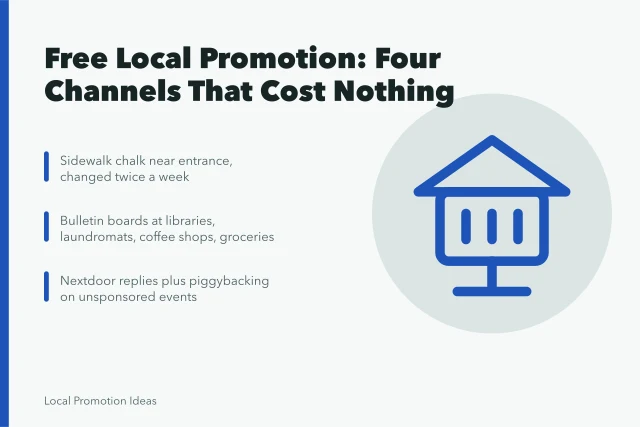
New members should get on the district email list first. Event deadlines, grant openings, and volunteer calls all arrive there, and the notice windows are short. Between events, borrow a few local promotion ideas and run them under the district's hashtag.
Pilsen: promotion programs and community partnerships
The Pilsen business district runs along 18th Street and nearby commercial blocks on the Lower West Side. Its promotion style leans on cultural events and community partnerships.
Pilsen's identity is a draw. Art walks, gallery openings, and street festivals pull visitors from across the city. Shops and restaurants that stay open during those hours capture spending that would otherwise stay downtown.
The district works closely with local nonprofits and arts groups. Those partnerships stretch a small budget: a shared event costs less than a solo campaign, and each partner brings an audience.
Businesses in Pilsen often use bilingual marketing. Signage, menus, and social posts in Spanish and English reach both longtime residents and newer visitors.
Grant access in Pilsen flows through community development organizations as much as through any chamber. Facade programs and small business funds are announced in cycles, often with a neighborhood preference.
Transportation shapes the traffic. Many visitors arrive on the Pink Line or by bike, so a rack, a window sign, and a clear entrance do more for walk-in trade than a paid ad on a busy weekend.
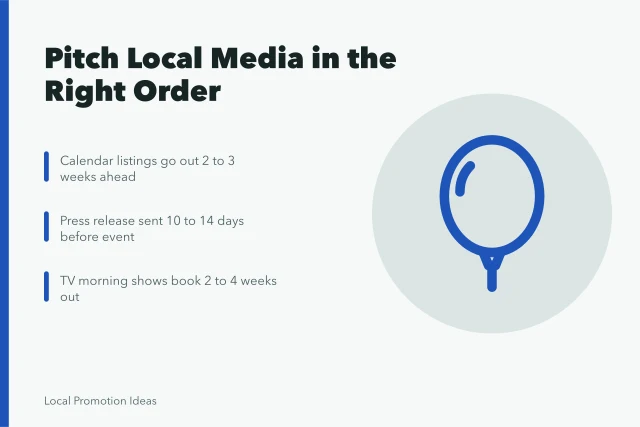
Reporters do come through during art walks. Shops that learn to pitch local media around a festival often land coverage the district newsletter cannot provide.
If you are new to the block, introduce yourself to the development group before you need anything. Districts remember the businesses that show up to meetings.
Other districts worth knowing across the city
Chicago has dozens of organized commercial streets. The table below shows a few with active promotion programs and the kind of support they typically offer.
| District | Area | Typical district promotion programs |
|---|---|---|
| Andersonville | North Side, Clark St | Events, shared ads, facade grants |
| Pilsen | Lower West Side, 18th St | Cultural events, nonprofit partnerships |
| Chinatown | Near South, Wentworth Ave | Festivals, visitor guides, signage |
| Hyde Park | South Side, 53rd St | Chamber mixers, shopping campaigns |
| Logan Square | Northwest Side, Milwaukee Ave | Markets, art walks, member promos |
Outside these, look at Uptown, Rogers Park, Bronzeville, Little Village, and Lincoln Square. Each has a chamber or SSA with its own calendar and grant cycles.
The differences are practical, not cosmetic. A district built around restaurants will schedule evening events; one built around service businesses may put its money into shared directories and a website instead.
Ask two questions before you commit dues anywhere: how many events run per year, and what share of the budget goes to marketing rather than cleaning or landscaping. The answers tell you what you are buying.
Suburban districts in Illinois follow the same pattern, which is why the SBA keeps Resource Partners - Small Business Administration such as Small Business Development Centers available for planning help.
If you want to know which shared tactics actually pay off, the published sidewalk sign promotion small business guide is a better guide than any single district's pitch.
Applying for district grants and joining a promotion program
District grants are rarely large. Treat them as a discount on work you already planned, not as startup capital. The steps below match how most Chicago districts run their cycles. The SBA's Local assistance by district | U.S. Small Business Administration page lists Illinois regional support if you need outside help with the paperwork.
- Confirm which body covers your address: chamber, SSA, or development group. Ask the alderman's office if you are unsure.
- Attend one meeting or event before applying. Districts favor businesses they have seen.
- Get the current guidelines in writing, including eligible costs, match requirements, and deadlines.
- Collect quotes, photos, and a simple scope of work for the project.
- Submit before the deadline and keep receipts, since most grants reimburse after completion.
Use this checklist before you send anything:
- I know the exact district body and contact name.
- I have the current guidelines, not last year's.
- My project fits the eligible cost list.
- I have two written quotes.
- I can cover the cost until reimbursement arrives.
- My business license and tax records are current.
- I have a one-paragraph description of the project's public benefit.
Not every district pays cash. Some offer in-kind support instead: free photography, a booth at a festival, a spot in a printed guide, or help designing a window display. Ask what is available outside the grant program, because in-kind help often arrives faster and comes with less paperwork.
Before you spend on anything paid, run the plan through a local tv advertising cost small business guide to confirm you have the basics covered.
For anything beyond a district grant, the SBA's Grow your business - Small Business Administration guide covers local marketing and promotion planning in plain terms.
Coordinating district events with your own local promotion ideas
District events give you a date and an audience. Your job is to convert that traffic into repeat customers. A little planning turns a sidewalk sale into a list of names.
Worked example: a Pilsen bakery joins an art walk. Two weeks out, it posts the event date and its own extended hours. On the day, it offers one item at a small discount and collects emails at the register. The week after, it sends a thank-you note with the next event date.
Total extra spend: a few dozen samples and an hour of posting.
Timing matters. Ask the district for the event calendar a quarter ahead, then build your own promotions around those dates instead of competing with them.
For a launch or reopening, pair the district event with your own grand opening ideas so the district's audience sees a reason to walk in.
Keep one simple record for each event: what you spent, how many people came, and how many returned within a month. After two or three cycles you will know which district dates deserve extra samples and staff, and which ones you can skip.
Common questions
Do I have to be a chamber member to join district events? Usually yes for member-only events and directory listings. Some street festivals and public markets are open to any licensed business that applies.
How much are typical district grants? Most are small, reimbursable awards tied to facade, signage, or equipment. Amounts vary by district and funding cycle, so ask the office for current figures.
Can I get help if my block has no organized district? Yes. SBA resource partners and Small Business Development Centers offer free or low-cost marketing planning even where no chamber or SSA exists.
Do district programs work for service businesses, not just retail? They can. Service businesses often benefit most from directory listings, mixers, and shared advertising rather than foot-traffic events.
Are grants available for digital marketing? Some districts fund websites, photography, and online ads. Others restrict funds to physical improvements, so read the guidelines before applying.