Guides
Building a plan for stargazing trips businesses: the joint pitch
Gateway town businesses shape the sky above a park. Lighting choices, late food and simple scheduling changes decide whether night visitors come and return.
A park can protect its own lighting and still lose its sky. Skyglow travels, and the businesses in the nearest town contribute a large share of it. That makes the gateway town a participant rather than a bystander. It also makes night visitors a commercial opportunity that most towns are not set up to serve. The two facts are connected.
What to take away
- Light pollution travels a long way, so a town's fixtures affect a park's sky.
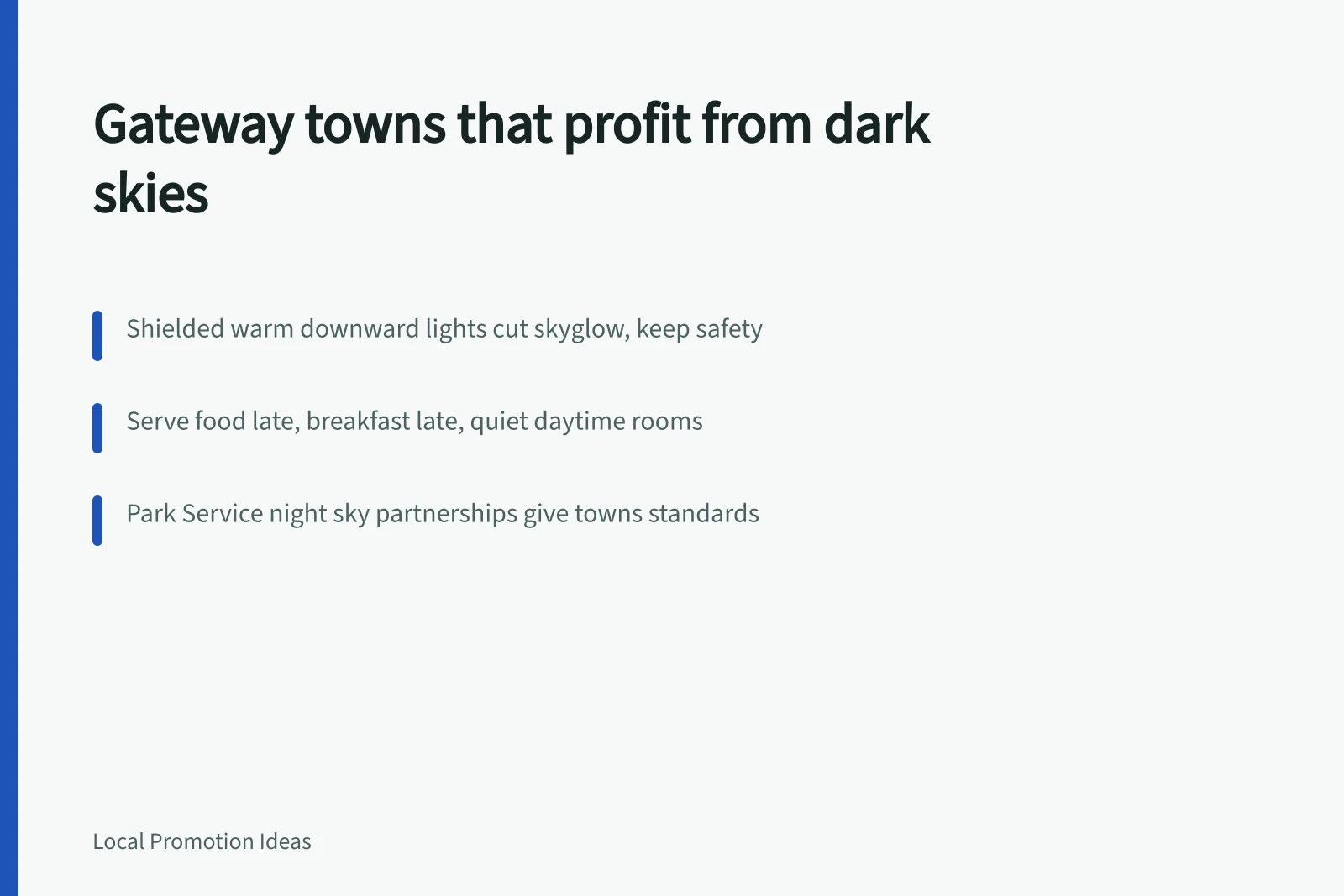
- Shielded, warm colored, downward facing lights cut skyglow without cutting safety.
- Night visitors need late food, early breakfast and daytime quiet, which few towns provide.
- Working with the park is a recognized route, and formal partnerships already exist.
Lighting is the main lever
The Park Service's guidance on protecting the night sky at home and in your community is written for residents but reads as a business checklist. It explains that light pollution comes from the misuse or overuse of outdoor lighting. Poorly aimed fixtures cause glare, which harms night vision and can create safety problems.
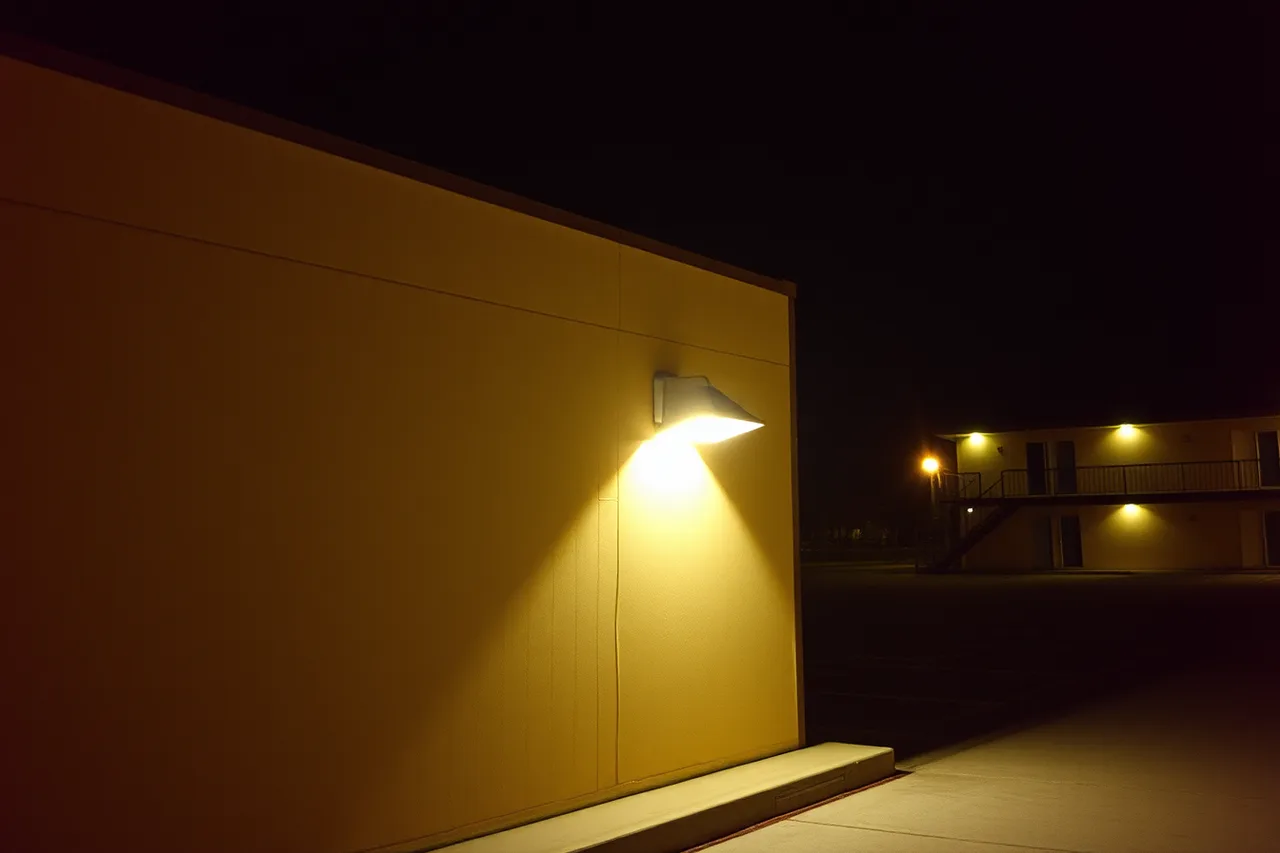
Replacing old fixtures with efficient warm white light saves money while reducing replacement costs. The guidance also notes that light can travel a long way from its source, and that preserving starry skies can support local economic growth through astro-tourism.
For a motel, a diner or a fuel station, the practical version is short:
Dark sky lighting checklist
- Aim light down at the ground
- Shield the fixture from distant view
- Use warmer color temperatures
- Use the lowest level needed
- Switch off what is not needed
- Add motion sensors instead of all-night light
None of that reduces security. Glare, not darkness, is what makes a parking area hard to see across, and a shielded fixture at half the output usually reads as brighter to the eye. For a property that sells the sky directly, the same retrofit plus a short guest briefing at check in does more than either measure on its own.
There is an existing framework to join
Businesses often assume this is an informal matter of goodwill. It is not. The Park Service describes its night sky partnerships with a professional lighting body and with the organization that runs dark sky place certification. It notes that gateway communities need the same standards and practices developed for parks, with the materials made available to communities, counties and states.
That gives a town somewhere to start that is not a guess. It also means a business that upgrades its lighting is contributing to something measurable rather than making a gesture. A town chasing the trade should also know where a visitor's weekend money actually goes, which is mostly fuel, two nights of lodging and food at odd hours.
What night visitors actually spend money on
Stargazers keep unusual hours, and towns lose their custom by closing at eight. The businesses that do well serve the schedule:
- Food available late, or packed meals sold in the afternoon for eating at midnight.
- Breakfast that starts late, since guests were up until two.
- Rooms with blackout curtains and a quiet daytime policy.
- Hot drinks, hand warmers, cheap blankets and red flashlights, sold near the exit road.
- Clear information on where to observe locally, so visitors do not trespass by accident.
The joint pitch
The strongest position for a town is to be the place that people sleep near, not the place they drive through. That requires darkness, food and beds, in that order, the sequence set out in our guides to where to stay near the best stargazing trips and to planning stargazing trips.