Guides
Carpet cleaning local search: a checklist
A carpet cleaning local search checklist helps you align your Google Business Profile with the specific jobs you want, from wool rugs to commercial tiles.
What to take away
- Your profile should name the work you want: wool rugs, viscose upholstery, pet treatment, commercial carpet tiles.
- Service-area settings decide which towns you appear in. Set them to where you will actually drive.
- Reviews come from real customers, asked plainly, with no discount and no screening.
- Track calls and form fills by town, not by view count, because views do not pay for fuel.
- Re-check the profile whenever your minimum charge, service area or method changes.
Match the profile to the work you take
Google ranks local results on relevance, distance and prominence, per Google's local ranking guidance. For a carpet cleaner, relevance is specific. A profile that says "carpet cleaning" competes with every van in the county. A profile that says wool area rugs, viscose upholstery and commercial carpet tiles competes with the few who do those jobs.
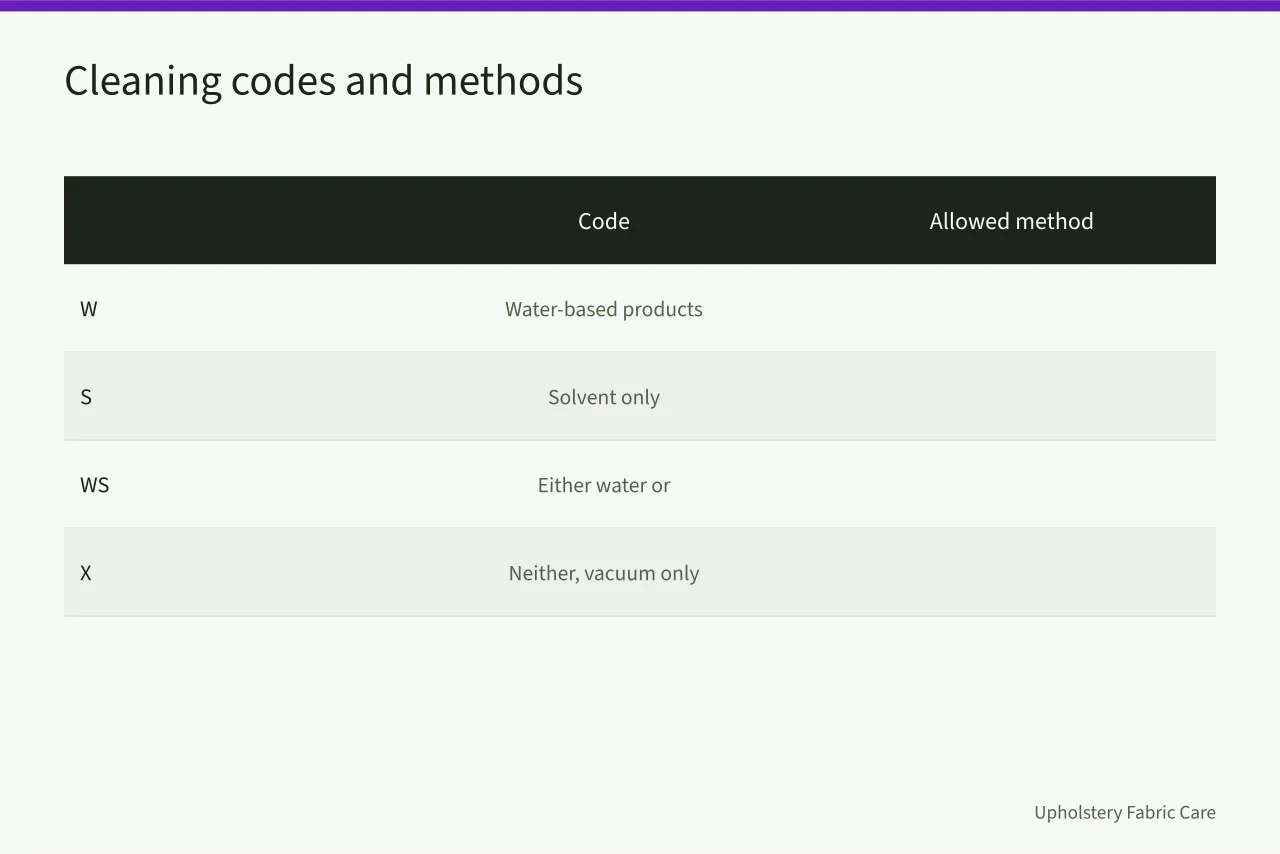
The cleaning code on the tag decides which jobs you can quote. W takes water-based products, S solvent only, WS either, X neither, vacuum-only. A viscose rug carries the code that tells you if your truck-mount can touch it.
Put the codes you work with in your service list, and refer the rest out. A referred job costs you nothing and protects the review.
Service-area settings are the second lever. Set the towns you will reach inside your drive-time limit, not the whole metro. A profile that appears in a town you will not serve produces calls you decline, and declined calls drag on the ranking you built.
Reviews, fees and the FTC line
Ask every customer, at the end of the job, by text or email. Ask all of them. The FTC guide on soliciting and paying for online reviews says requests should go to real customers, not just likely happy ones. A discount, gift or paid placement must not create a false picture.
A $20 credit for a review can turn a good month into a letter.
Reply to reviews without naming the customer's address, the fiber, or the price. "Thanks, glad the wool rug came up well" is enough.
The pages that earn the call
One page per service you actually sell, written about the job, not the keyword. A page on viscose rugs should say why the fiber changes the method, what the cleaning code means, and what you test before you start. A page on commercial carpet tiles should say what a night shift costs in access and drying time.
Link the service pages from the profile. The business plan guide covers how service mix and route density set your minimum charge, which is the number that decides whether a small job is worth the drive.
| Signal | What to record | Review trigger |
|---|---|---|
| Qualified calls by town | Count per week, with source | A town produces calls you decline |
| Bookings by service | Fiber or method named | A service page gets no calls |
| Drive time per job | Minutes, door to door | Average passes your limit |
| Review requests sent | Sent and received | Ratio drifts below half |
Common questions
Should I list every town I will travel to?
No. List the towns you reach inside your drive-time limit and will quote without a surcharge. A wider area brings calls you turn down, and those calls cost you the ranking you earned.
Can I offer a discount for a review?
The FTC guidance treats incentives as a problem when they create a misleading picture. Ask every customer the same way, with no reward attached, and the reviews you get will hold up.
How often should the profile be updated?
Whenever hours, service area, minimum charge or methods change, and monthly when you read the performance data. Stale hours are the most common reason a ready customer calls someone else.
Do I need a page for each service?
Only for services you want more of. A page that repeats the homepage in a different order adds nothing. A page that explains the fiber, the code and the test does.