Strategy
How Austin small businesses use SXSW for year round promotion
Local promotion ideas Austin owners can carry past March: map SXSW foot traffic, work the Austin Chamber, and pitch local media for year round gains.
What to take away
- The best local promotion ideas Austin owners use treat SXSW as a twelve month asset, not a ten day event.
- SXSW events bring roughly 300,000 attendees to downtown Austin each March, and most nearby businesses capture only a fraction of that traffic.
- The Austin Chamber of Commerce runs festival-adjacent programming that small members can join without a big sponsorship budget.
- Local media outlets plan their SXSW coverage in January, so pitches sent in February land too late.
- A post-festival follow-up plan turns one-time visitors into repeat customers through April and beyond.
- A year-round promotion calendar spreads festival costs across twelve months of marketing instead of one.
What SXSW brings to Austin and what it leaves behind
Every March, SXSW events fill downtown Austin with conference badges, film crowds and music fans. The festival draws hundreds of thousands of attendees across its tracks, and the economic effect reaches far past the Convention Center.
Hotels, restaurants, bars, food trucks and rideshare drivers see their busiest week of the year. Retailers near Congress Avenue and East Sixth Street get foot traffic they cannot buy at any other time.
Then April arrives. The tents come down, the badges go home, and many businesses return to normal without capturing a single email address or follower from the surge.
That gap is the opportunity. A business that treats SXSW as the start of a relationship, not a one-week cash grab, gets twelve months of value from ten days of attention.
Austin's tech and startup scene makes the audience unusually valuable. Many attendees work remotely, travel back for other events, or move to the city within a year or two.
Mapping SXSW foot traffic to a year-round promotion calendar
A year-round promotion calendar starts with the patterns you already see each March. Note which hours, blocks and customer types spike near your door, then build offers around those patterns for the rest of the year.
- Record daily foot traffic during SXSW week by hour and neighborhood block.
- Note which visitors ask about your regular menu, services or hours rather than the festival special.
- Match each visitor type to a month when they are likely to return, such as conference season, summer tourism or football weekends.
- Build one offer per quarter that speaks to that returning group.
- Schedule follow-up messages for the weeks when those groups typically book again.
A downtown coffee shop might see badge holders at 7 a.m. and music fans at midnight. Those are two different audiences with two different return cycles.
The calendar should also include low-cost tactics that work outside festival season. Plenty of local promotion ideas rely on partnerships, email lists and neighborhood events rather than paid ads.
Small businesses can get free guidance on building these plans through Local assistance - Small Business Administration. That counseling is available year round, not just before the festival.
Working with the Austin Chamber of Commerce on festival-adjacent events
The Austin Chamber of Commerce coordinates member events, ribbon cuttings and business programming that run alongside the festival without competing with it. Membership gives small businesses a seat at tables they cannot buy into alone.
Chamber mixers in February and March often draw visiting professionals and local operators in the same room. That is a cheap way to meet the people who book catering, plan offsites or need services during the festival.
Chamber committees also connect members with city departments, permitting help and neighborhood associations. For a food truck or pop-up, that access matters more than any ad.
If you are new to the city, the chamber's newcomer programming can introduce your business to other owners before the March rush. Relationships built in January pay off in bookings by April.
A grand opening or anniversary event timed near the festival can piggyback on the attention without competing for it. Good grand opening ideas can be adapted to a festival-week open house.
Local media, newsletters, and radio around the festival window
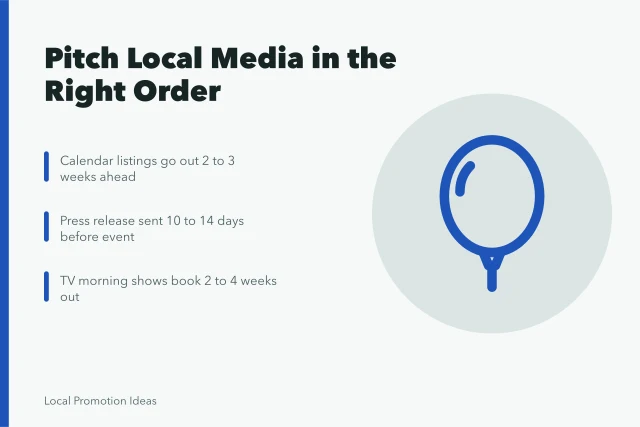
Local media outlets in Austin plan their SXSW coverage months ahead. The Austin Chronicle, Austin Business Journal, KUT and KUTX, and community newsletters all run preview packages in February.
That means your pitch window is January, not March. Reporters need local angles, not press releases about your existence.
Offer something specific: a data point from last year's festival week, a new product timed to the crowds, or a free service for badge holders. Learn how to pitch local media with a short script that respects a reporter's time.
Community newsletters and neighborhood email lists are easier to reach and often convert better. A mention in a downtown residents' newsletter reaches people who live near your door all year.
Radio spots during festival week cost more, but a single well-placed interview on a local station can outperform a month of display ads. Pair paid radio with earned coverage for the best return.
Local assistance by district | U.S. Small Business Administration can point Austin businesses toward regional marketing resources and workshops that many owners never find on their own.
Turning one-off visitors into repeat customers after March
A post-festival follow-up plan is what separates businesses that grow from the festival from those that just survive it. The plan starts during the event, not after.
Collect contact information at the point of sale with a clear reason to opt in. A discount for a future visit works better than a generic signup sheet.
Send the first follow-up within two weeks of the festival's end, while the memory is fresh. Mention something specific about their visit, then offer a reason to return in April or May.
Segment your list by visitor type. Conference attendees, music fans and locals who came downtown for the week need different messages.
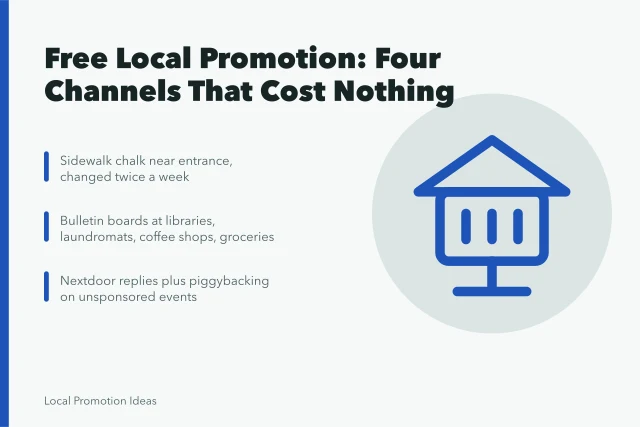
Businesses that read up on sidewalk sign promotion small business often find that follow-up timing matters more than the offer itself. Test two send dates and compare return rates.
SCORE and SBDC counselors, listed among Resource Partners - Small Business Administration, offer free help building these follow-up sequences for small teams without a marketing hire.
Budgeting a festival campaign that pays back over twelve months
A festival campaign should be budgeted against twelve months of revenue, not one week. That framing changes what you can justify spending.
Start with a realistic split. Most small Austin businesses do better putting money into follow-up and retention than into a single festival-week ad that disappears.
A worked example: an East Austin restaurant budgets $3,000 for March. It spends $1,200 on extra staff and signage, $800 on a photographer and social content, $600 on email and SMS tools for the year, and $400 on a post-festival event in April.
The April event reuses the photos and the email list from March. By June, the restaurant has booked repeat catering and private events from contacts made during the festival.
Track cost per acquired customer across the whole year, not just festival week. That number tells you whether next year's budget should grow or shift. Owners comparing formats can also work through common small business marketing strategy questions that come up on tight budgets.
SBA growth guidance on local marketing and promotion can help you set these benchmarks without hiring a consultant.
Common questions
How early should an Austin business start planning for SXSW? Start in November or December. Media pitches go out in January, chamber events fill in February, and staffing and permits need lead time before March.
Do small businesses need a SXSW badge to benefit from the festival? No. Most of the value comes from foot traffic, nearby events and media attention, all of which reach businesses without a badge.
What is the cheapest way to reach festival visitors? Email capture at the point of sale, neighborhood newsletters and partnerships with nearby businesses cost little and produce measurable returns.
How long should a post-festival follow-up plan run? At least six months. Two or three well-timed messages between April and September keep your business visible to visitors who return to Austin later in the year.
Can the Austin Chamber of Commerce help non-members? Some events and resources are open to the public, but most programming, directories and introductions require membership. Compare dues against the bookings you expect.
What should a first-year festival budget look like? Keep it modest. Fund contact collection, a photographer and one follow-up event first, then add paid ads once you can measure return rates.